

In this piece
First published February 2024. Restored in full in October 2026.
Whilst far from a new concept, I’ve found few resources that talk about how to merge recruitment agency and job board business models. Reed is the obvious huge example, but I’m talking about niche boards and agencies.
I’ve networked heavily over the last two years, whilst building my own fusion model, and two things have become clear:
- Recruiters know little about job board businesses.
- Job board owners know little about recruitment businesses.
I hear about the frustrations and successes from both business types, and it’s clear to me that they can solve each other’s problems beyond a simple client-supplier relationship.
All of this whilst improving service for clients and candidates alike. Deliver more to the market and you’ll succeed more.
Why now?
Despite Reed launching their internet venture in 1995, I think this is only now emerging as an interesting niche in the world of talent.
Firstly, the democratisation of technology means it’s easier than ever to build tech-based products without significant investment. You can teach yourself to do it more quickly and easily than ever before.
Secondly, both candidates and employers have higher expectations. They have access to the same tools recruiters and job boards do. The majority are on LinkedIn, which is also a job board and powers the majority of recruiters. Both business types face a battle to stay relevant.
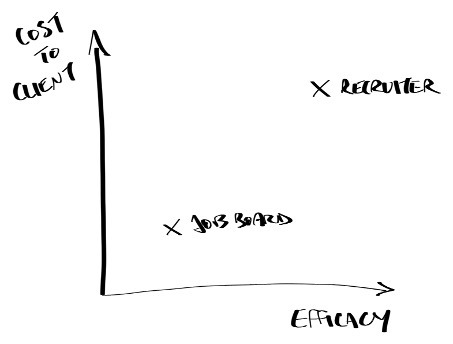
Lastly, commercial pressures push both sides to explore the product ladder: more productised services in the case of recruiters, or a more consultative approach for job boards.
Real-world examples
We’ve mentioned Reed already.
Alec Reed was a serial innovator, never standing still. With the advent of the internet in the mid 90s, they launched Reed.co.uk in 1995. It took a while to gain traction, but by the year 2000 they had 42,000 jobs on the site and doubled it soon afterwards. It’s now a giant in the job board and education world.
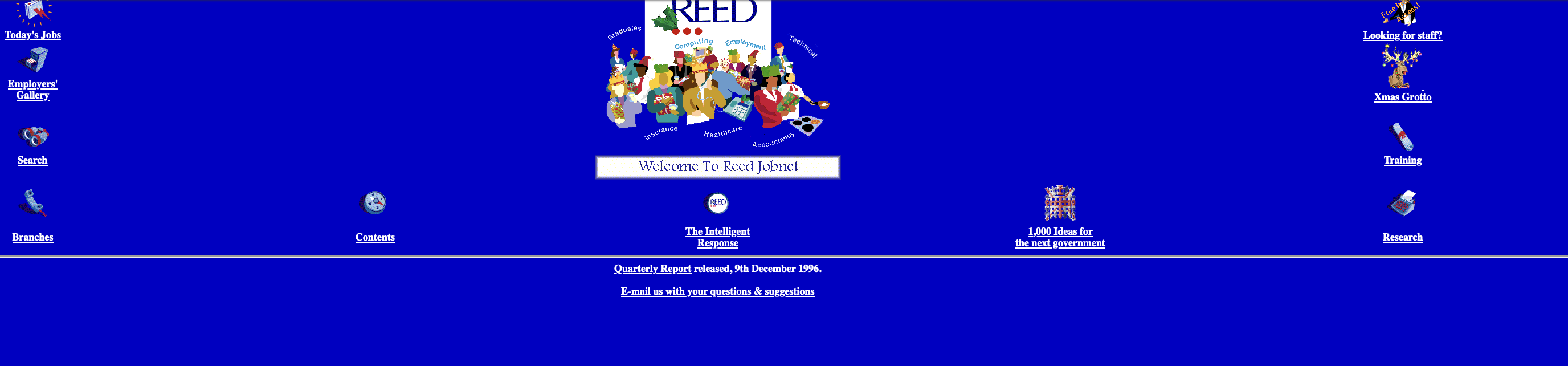
Reed.co.uk in 1996
They experimented with Freecruitment, allowing anyone to advertise for free, including competitors. Whilst this is hugely counterintuitive to anyone in recruitment, it was rocket fuel for their traffic, and crowds attracted crowds.
They had pushback when they eventually monetised, but by then they were the market leader. Alec Reed said in 2012 that profits were modest due to continued reinvestment, but the asset value is huge.
They also noticed no appreciable drop in recruitment business from cannibalising their bricks and mortar business. I’d guess it probably enhanced their recruitment business.
As Alec Reed says in his autobiography:
If a bus looks as if it is going somewhere interesting, it pays to get on it - even though you can sometimes end up walking home.
I believe the same is true of the opportunity to merge these worlds, now.
Why recruitment agencies should build a job board
The benefits to a recruitment agency are many. A job board can become a key marketing asset for a recruitment agency, whether or not it becomes a primary revenue generator.
Here are just a few of the benefits:
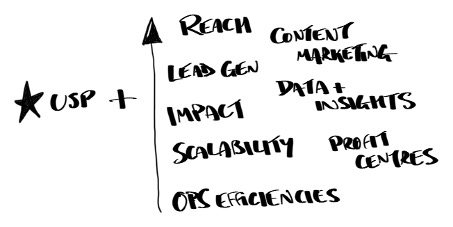
- Expand your reach. A job board has the potential to drive more traffic than a simple brochure recruitment website ever will. You only have to look at the keyword rankings and search estimates in the case studies of popular recruitment website agencies to realise they provide little ROI. Before I built our board, I had never worked in a recruitment business where the website was an asset beyond looking nice and proving you exist.
- Develop a USP. Recruiters always struggle to define a USP. Faster, better, blah blah. With a job board you can quantify your reach, as well as provide insights and services others can’t.
- Automate content and website relevance. The problem with building a website? You then have to keep it up to date for it to stay relevant. You need to do better than generic 500-word articles on top interview tips. They will not rank and are a waste of time. A job board gives you more to work with, as jobs are fresh content.
- Make your business more scalable. A highly trafficked website gives you more capability as a recruiter. It’s an owned asset, so it will help you to scale.
- Improve operational efficiency. It creates inbound demand, which you can turn into operational gains. You start to own your pipelines rather than leasing them from others.
- Increase impact. As a recruiter you can do more with less. An automated job board takes care of a number of job functions you would typically hire for or outsource. I’ve written separately about what that looks like when a recruitment firm runs its back office on Claude.
- Serve more of your market. You can’t fill every role. In fact, most recruiters’ fill rates are woeful. The industry is a wasteful one. What do you do with the jobs you can’t or don’t want to fill? How do you help candidates you don’t have anything for, or your silver medallists? A job board helps them when you can’t personally, and it’s free to the user. It’s an extension of your quality of service.
- Own your data. Job boards are a treasure trove of data. You can slice and dice it many ways, and it’s your data, not LinkedIn’s, Indeed’s or another job board’s.
- Become a profit centre. It’s kind of obvious, but you can monetise a job board in numerous ways. Personally, I wouldn’t set revenue as a primary goal. Treat it as a happy byproduct of a successful job board and fused model.
- Lead generation. Owing to all of the reasons above, you will inevitably win more recruitment business. It might look different within your new suite of services, but there will always be roles where a consultant is needed.
Why job boards should develop recruitment services
I think most job board owners would balk at the thought of setting up a full-blown service business, but I don’t think it’s as scary as it sounds.
It can be high leverage if structured in the right way, and this does not mean copying a traditional recruitment agency model with 180 or 360 recruitment consultants.
Here are a few reasons to consider it:
- Low-hanging revenue. Some roles will always need a human to make a match. Job boards are missing out by not offering an end-to-end service at a higher fee than advertising.
- Stronger partnerships. Solving more problems for your customers will strengthen your relationships, moving you from a transactional relationship into a consultative one.
- Increase impact. Someone once told me that all roads lead back to recruitment services, and there will always be roles that need more support. By offering a better outcome guarantee you increase your impact and create a network effect across your brand.
- Reduce market pressure. Advertising revenue often faces pressure from traffic swings, SEO unpredictability and large-scale competition. Adding recruitment services creates an alternative income source.
- Improve the quality of your job board. Providing an end-to-end service gets you closer to the problem and helps you understand your customers’ needs and challenges. That will inform the continuous improvement of your job board.
- Lead generation. As job boards already know, not every nail requires a sledgehammer. For roles that don’t need a recruiter’s support, you’re more likely to win business on your existing products.
Benefits to customers
Combining a job board with recruitment services multiplies what you can offer. It has real benefits for both candidates and employers.
For candidates
- More options, better outcomes. Having both means you can provide more jobs, better information and more choice. This helps candidates secure better career opportunities.
- More market insight. By curating jobs, you offer a broader view of the market and better data on employers and the jobs themselves.
- Continual updates. Regular automated updates keep candidates informed about the latest opportunities.
For employers
- More reach. With an integrated job board and recruitment service, you tap into a much bigger audience, which strengthens your claim to the best reach in your specialist niche.
- A unique talent pool. A combined platform can turn up candidates you can’t find through other channels. It cuts through the high-volume, low-quality responses employers often get from large job boards. Better quality leads save employers time and effort, and make hiring more cost-effective.
- Flexible services and pricing. An employer can buy a job ad or hire your services on a search or retained basis, depending on their needs. They can also try different service models, such as pay-per-application or pay-per-outcome. You can also use your platform to advertise roles according to their priority. Employers get control and choice.
Boltjobs.com and Bolt Search: my experience
I’ve spent the last two years building Boltjobs.com alongside my recruitment business.
It’s been tough, but rewarding.
I’ve seen business growth, gained leverage and developed a cast-iron USP. The learning curve has been extremely steep and I’m still learning every day.
If you already straddle both sectors, I’d love to hear from you. I’m a huge believer in collaborating to achieve more.
Looking back from 2026: I came back to this topic after Job Boards Connect in May 2025, in Bridging the gap.
If you’re thinking about running a job board alongside a recruitment desk and want help with the build or with wiring it into your recruitment process, book a 30-minute call.