
In this piece
Every recruitment tech vendor is selling you “AI-powered” something. Smarter matching. Faster sourcing. Better shortlists.
But the most valuable thing a recruiter does, the decision itself, is the one thing AI still can’t touch.
In my experience working with recruitment businesses on their technology and data strategies, the gap between what AI promises and what it delivers comes down to one overlooked idea: the decision trace.
A trillion-dollar idea from enterprise software
There’s a piece doing the rounds from Foundation Capital called “AI’s Trillion-Dollar Opportunity: Context Graphs” that stopped me in my tracks. It’s about enterprise software, not recruitment, but the core argument applies so directly to recruitment that I’m surprised nobody in our industry has picked it up yet.
Here’s the gist. The last generation of enterprise software became valuable by being systems of record. Salesforce for customers. Workday for employees. SAP for operations. Own the data, own the workflow, own the lock-in.
The question now is whether those systems survive the shift to AI agents. Jaya Gupta and Ashu Garg at Foundation Capital argue that AI agents don’t replace systems of record. They expose what’s missing from them.
What’s missing? The reasoning.
Your CRM stores what happened. A CV was sent. An interview was booked. A placement was made. What it doesn’t store is why any of those things happened. The judgment, the context, the accumulated knowledge that led a human being to make a specific decision at a specific moment.
Foundation Capital calls this accumulated reasoning a “context graph”, a living record of decision traces stitched across people, systems and time. Their argument is that whoever captures these traces will build the next trillion-dollar platforms, by storing the thinking behind the data rather than more data.
Now, read that again and tell me it doesn’t describe exactly what a good recruiter carries around in their head every single day.
What a recruiter actually does (that nobody records)
Let’s get specific, because this only matters if you can see it in your own business.
Your CRM says “CV sent to Client X.” That’s the record.
Here’s what it doesn’t say.
The recruiter knew the hiring manager personally from a conference two years ago. They knew the client had just lost their CFO to a competitor, which meant the board was nervous about the finance function and would move fast for the right person. The recruiter also knew that the candidate in question had mentioned, in a call six months prior, that they were finishing an MBA and would be open to something more stretching.
The timing was deliberate. It was a judgment call built on a dozen data points that exist nowhere in any system.
That is the decision trace.
Here’s another one. A candidate gets progressed to shortlist despite a CV that, on paper, doesn’t match the spec. The recruiter has spoken to this person three times over 18 months and knows they undersell themselves on paper. They’ve seen them present at a roundtable. They know from experience that this candidate interviews brilliantly and that the client values presence and gravitas over a perfectly formatted career history.
None of this is in the CRM, and none of it is searchable or reportable.
And one more. A client gets quietly deprioritised despite being a top-five fee generator. The data would scream “focus here.” But the recruiter knows from direct experience that this client’s interview process kills 80% of good candidates, that their hiring manager undermines external recommendations, and that the retainer fees mask a terrible conversion rate. So the recruiter redirects energy towards a smaller client where the working relationship is stronger and the results are more predictable.
Try getting AI to make that call.
What AI already does well
To be fair, AI already does useful things in recruitment. Parsing CVs at speed. Automating outreach sequences. Scheduling interviews. Running initial screening at volume. These are real gains, and any business not using them is doing admin it doesn’t need to.
But notice what all of these have in common.
They’re administrative tasks. They follow rules. They operate on structured data. Send this email at this time. Match these keywords to this job spec. Flag this candidate based on these criteria.
The moment a recruiter makes a judgement call, AI falls off a cliff.
“This person isn’t right on paper but I know this client would love them.”
“This client is desperate but I don’t trust the brief, so I’m going to push back before wasting candidates’ time.”
“The market has shifted in the last three weeks and this role isn’t going to attract the calibre they want at the salary they’re offering.”
These aren’t edge cases. This is the job.
The part of recruitment that makes the money is judgement under uncertainty, informed by relationships, pattern recognition and accumulated context that no system has been designed to capture.
The CRM problem
This is where it gets uncomfortable for the recruitment technology industry.
Most recruitment CRMs (Bullhorn, Vincere and the rest) are systems of record for objects. Candidates. Jobs. Placements. Companies. Contacts. They store entities and transactions. They’re very good at telling you what exists and what happened.
They are terrible at telling you why.
Nobody is capturing why a particular shortlist was constructed the way it was. Nobody is recording why a candidate was rejected at longlist stage despite matching the spec on paper. Nobody is storing the pattern of which approaches work with which type of hiring manager, or what reignited a dormant client relationship after six months of silence.
This is the exact gap that Foundation Capital identifies in the enterprise software world. They call it the missing layer: “the exceptions, overrides, precedents, and cross-system context that currently live in Slack threads, deal desk conversations, escalation calls, and people’s heads.”
Sound familiar?
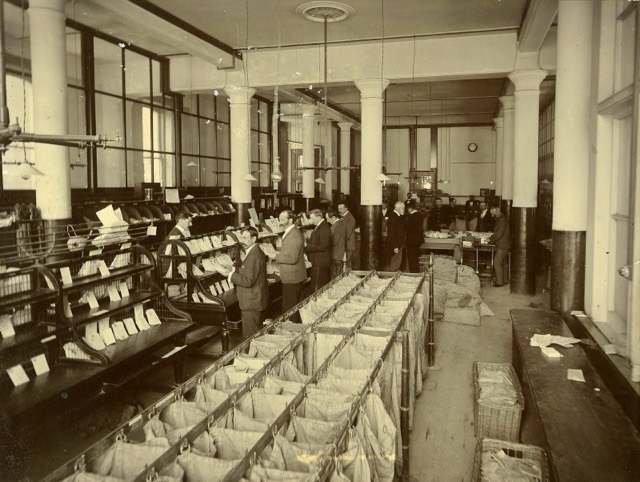
In recruitment, that missing layer lives in recruiter notebooks, email threads, WhatsApp conversations, LinkedIn DMs, and mental models built over years of working a specific market. It walks out the door every time a good recruiter leaves your business.
And until the industry builds, or demands, systems that capture decision context at the point it happens, AI will keep automating the easy stuff and leaving the hard stuff entirely to humans.
That’s why the “AI replaces recruiters” narrative is premature. The infrastructure for it doesn’t exist yet.
What would need to be true
So what would it take for AI to replicate recruiter judgment? Drawing on the context graph framework, I see four conditions.
First, decision traces would need to be captured at the point of action, not reconstructed after the fact. That means the system would need to record not just “CV sent” but “CV sent because of X context, Y relationship history, and Z market timing.” In real time, as part of the workflow, rather than as an afterthought nobody fills in.
Second, you’d need cross-system synthesis. The reasoning behind a recruiter’s decision pulls from the CRM, their email inbox, LinkedIn messages, call notes, market intelligence, personal relationships, and sometimes just a gut feeling built on pattern recognition. An AI agent would need to see across all of those at once, the way a recruiter’s brain does without thinking about it.
Third, exception logic would need to be made explicit. Why did you deviate from the standard process this time? Why did you skip a stage? Why did you send a candidate to a client that isn’t on their target list? These exceptions are where the real value lives, and they’re the things nobody logs.
Fourth, precedent would need to be searchable. What did we do last time in a similar situation? Did it work? What was different about the context? Right now, the answer to that question lives in one person’s memory. If they’re off sick, on holiday, or have left the business, the precedent is gone.
This is a different technology problem from “AI-powered candidate matching”. It’s about making reasoning visible.
What recruitment leaders should do now
If wholesale AI replacement isn’t around the corner, and I don’t think it is, what should recruitment business owners and operators focus on?
Start capturing more of the “why.” You don’t need fancy technology for this, just a habit. Encourage your team to log why they did something as well as what they did. Even simple notes on why a candidate was progressed or rejected start building the foundation for future AI capability. Right now, that context is just evaporating.
Stop confusing automation with intelligence. Automate the admin, absolutely. Parse CVs faster. Automate scheduling. Use AI to draft initial outreach. But don’t mistake any of that for better judgment. The hard stuff is still hard. It still requires humans.
Think about your knowledge retention. When your best recruiter leaves, what walks out the door? If it’s all in their head, you’re vulnerable. Start structuring your processes and documentation so that accumulated wisdom becomes a company asset, not an individual one.
The real threat is losing what you already know
The recruiters who will be replaced by AI aren’t the ones doing the job at its highest level. They’re the ones who’ve reduced themselves to administrative tasks: CV keyword matching, scheduling, basic outreach.
If that’s your job description, yes, worry about AI.
But if your value is in judgment, relationships, pattern recognition, and the accumulated wisdom of having worked a market for years? AI isn’t coming for you. It can’t. The infrastructure to capture what you do doesn’t exist.
The real threat is quieter and more immediate: the slow erosion of institutional knowledge as good people leave and take their decision traces with them. The recruiter who knew why that placement worked. The one who could read a hiring manager’s hesitation on a call. The one who had seen enough cycles to know when the market was shifting.
That knowledge walks out the door every week in recruitment businesses around the world. And until someone builds systems that capture it, AI won’t replace those recruiters. But their absence will.
Building the infrastructure we actually need
The recruitment businesses that win the next decade will be the ones that work out how to capture and compound their best people’s decision traces before their competitors do.
That starts with small, unglamorous workflows. A reason logged with every shortlist decision. Call notes that land against the right record. A handover that exists before someone hands in their notice. I’ve written more on what that looks like for recruitment firms.
If you want your recruiters’ reasoning captured as part of the shortlist and handover workflow, book a 30-minute call and we’ll map where it’s leaking today.
Further reading: Context Graphs: AI’s Trillion-Dollar Opportunity (Foundation Capital) and Jaya Gupta on X