Elementary process plant
occupations n.e.c.
Job holders in this unit group assist the work of machine operatives and perform a variety of manual tasks in foundries, engineering and allied trades and in other process and plant operations not elsewhere classified in minor group 913: Elementary process plant occupations.
- Employees (UK)
- 41k
- Median annual pay
- £28,600
- Exposure score ?
- 0.8/10 Minimal 1.1/10 Minimal strict reading, with tools is 1.1/10 with-tools reading, strict is 0.8/10
- Wage exposure
- £94m £129m
Higher exposure than 48% of the 379 UK occupations we scored.
What this score means.
Most of this role's work is still hard for AI: physical presence, practised skill, judgement in context and direct care, the things that do not turn into text.
If you are in this role
Nothing here is under pressure today, but the frontier moves. Learn enough to direct AI at the paperwork around the job. People in hands-on roles who can do that become unusually useful inside their organisations.
Where the work usually starts.
This role's strict reading is low because its top tasks are judgement, not drafting. The three highest-stakes tasks below are still usually where the work starts. Switch to With tools to see what AI plus the right context can take on.
-
Load and unload items from machines, conveyors, and conveyances.
-
Count finished products to determine if product orders are complete.
-
Operate machinery used in the production process, or assist machine operators.
These are the most important tasks AI can already handle when paired with the right tools and context. The first wins usually come from building workflows around them. That is the difference between a model that could do the job and one that actually does it inside your business.
-
Count finished products to determine if product orders are complete.
-
Examine products to verify conformance to quality standards.
-
Measure amounts of products, lengths of extruded articles, or weights of filled containers to ensure conformance to specifications.
Every role has three or four places like these. Finding them takes an hour. Turning them into a workflow your team actually uses takes a few days.
Every task in the role.
Every O*NET task for this occupation, split by what AI can do unaided and what still needs a person. Importance is O*NET's 1 to 5 rating of how central each task is.
Tasks via O*NET "Helpers--Production Workers" (51-9198.00).
What AI can already do
2 of 30 tasks, unaided
Record information, such as the number of products tested, meter readings, or dates and times of product production.
Read gauges or charts, and record data obtained.
What still needs a person
28 of 30 tasks
Load and unload items from machines, conveyors, and conveyances.
Count finished products to determine if product orders are complete.
Operate machinery used in the production process, or assist machine operators.
Place products in equipment or on work surfaces for further processing, inspecting, or wrapping.
Examine products to verify conformance to quality standards.
Measure amounts of products, lengths of extruded articles, or weights of filled containers to ensure conformance to specifications.
Separate products according to weight, grade, size, or composition of materials used to produce them.
Turn valves to regulate flow of liquids or air, to reverse machines, to start pumps, or to regulate equipment.
Mark or tag identification on parts.
Start machines or equipment to begin production processes.
Mix ingredients according to specified procedures or formulas.
Observe equipment operations so that malfunctions can be detected, and notify operators of any malfunctions.
Remove products, machine attachments, or waste material from machines.
Tie products in bundles for further processing or shipment, following prescribed procedures.
Lift raw materials, finished products, and packed items, manually or using hoists.
Transfer finished products, raw materials, tools, or equipment between storage and work areas of plants and warehouses, by hand or using hand trucks or powered lift trucks.
Unclamp and hoist full reels from braiding, winding, or other fabricating machines, using power hoists.
Signal coworkers to direct them to move products during the production process.
Clean and lubricate equipment.
Pack and store materials and products.
Prepare raw materials for processing.
Perform minor repairs to machines, such as replacing damaged or worn parts.
Help production workers by performing duties of lesser skill, such as supplying or holding materials or tools, or cleaning work areas and equipment.
Attach slings, ropes, or cables to objects such as pipes, hoses, or bundles.
Position spouts or chutes of storage bins so that containers can be filled.
Wash work areas, machines, equipment, vehicles, or products.
Break up defective products for reprocessing.
Cut or break flashing from materials or products.
Tasks via O*NET "Helpers--Production Workers" (51-9198.00).
What AI can already do
5 of 30 tasks, with tools
Count finished products to determine if product orders are complete.
Examine products to verify conformance to quality standards.
Measure amounts of products, lengths of extruded articles, or weights of filled containers to ensure conformance to specifications.
Record information, such as the number of products tested, meter readings, or dates and times of product production.
Read gauges or charts, and record data obtained.
What still needs a person
25 of 30 tasks
Load and unload items from machines, conveyors, and conveyances.
Operate machinery used in the production process, or assist machine operators.
Place products in equipment or on work surfaces for further processing, inspecting, or wrapping.
Separate products according to weight, grade, size, or composition of materials used to produce them.
Turn valves to regulate flow of liquids or air, to reverse machines, to start pumps, or to regulate equipment.
Mark or tag identification on parts.
Start machines or equipment to begin production processes.
Mix ingredients according to specified procedures or formulas.
Observe equipment operations so that malfunctions can be detected, and notify operators of any malfunctions.
Remove products, machine attachments, or waste material from machines.
Tie products in bundles for further processing or shipment, following prescribed procedures.
Lift raw materials, finished products, and packed items, manually or using hoists.
Transfer finished products, raw materials, tools, or equipment between storage and work areas of plants and warehouses, by hand or using hand trucks or powered lift trucks.
Unclamp and hoist full reels from braiding, winding, or other fabricating machines, using power hoists.
Signal coworkers to direct them to move products during the production process.
Clean and lubricate equipment.
Pack and store materials and products.
Prepare raw materials for processing.
Perform minor repairs to machines, such as replacing damaged or worn parts.
Help production workers by performing duties of lesser skill, such as supplying or holding materials or tools, or cleaning work areas and equipment.
Attach slings, ropes, or cables to objects such as pipes, hoses, or bundles.
Position spouts or chutes of storage bins so that containers can be filled.
Wash work areas, machines, equipment, vehicles, or products.
Break up defective products for reprocessing.
Cut or break flashing from materials or products.
Stay on top of this.
An email when there is something worth reading: what is real in AI at work, what is noise, and what operators are doing about it.
Free. Unsubscribe any time.
Related occupations.
Other roles in Elementary occupations, and roles close by exposure.
What it means for your sector.
This role's score comes from Eloundou et al's 2023 task labels, weighted by O*NET importance within each O*NET-SOC code, then bridged to UK SOC 2020 through ISCO-08 (the ONS coding index) and US SOC 2010 (the BLS crosswalk). Employment and median pay come from ONS ASHE Table 14.7a, 2025 provisional, which covers employees only.
Back to the mapMethodologySources (PDF)Built 29 April 2026
Pictures
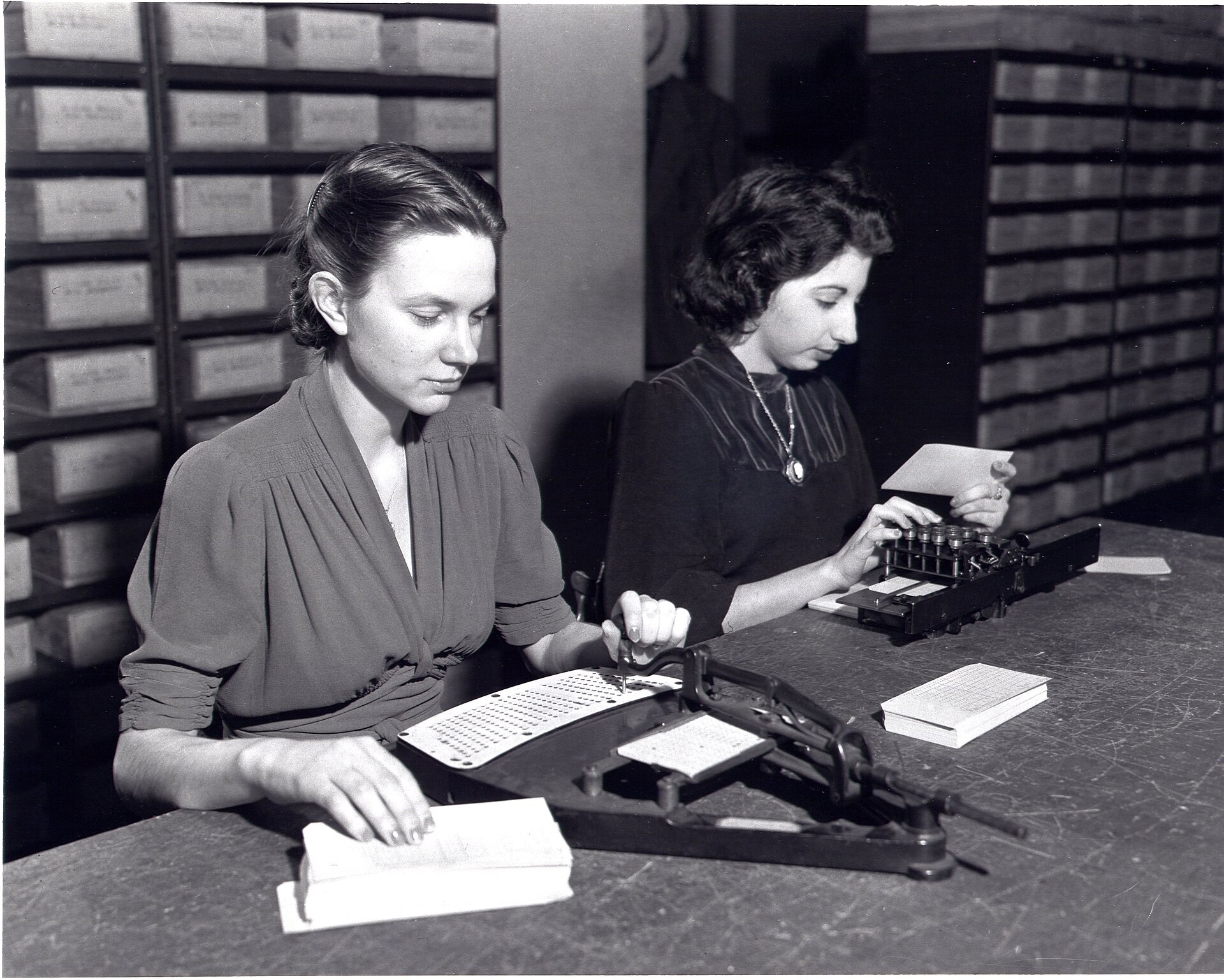
- "Census pantograph and 1930s keypunches" by U.S. Census Bureau employees, public domain, via Wikimedia Commons
- "Shepard Barclay, St. Louis lawyer, in his office" by Missouri Historical Society via DPLA, no known copyright restrictions, via Wikimedia Commons
- "Accountant's Office LCCN2016824374" by National Photo Company Collection, public domain, via Wikimedia Commons
- "Employment service in Oulu in the spring 1931" by Finnish Heritage Agency (Museovirasto), CC BY 4.0, via Wikimedia Commons