Bank and post office clerks
Bank and post office clerks deal with the payment and receipt of money, cheques and other routine financial transactions and open and close accounts. They advise upon financial products and services offered by banks, building societies and post offices.
- Employees (UK)
- 66k
- Median annual pay
- £27,671
- Exposure score ?
- 2.5/10 Low 6.8/10 High strict reading, with tools is 6.8/10 with-tools reading, strict is 2.5/10
- Wage exposure
- £457m £1.24bn
Higher exposure than 86% of the 379 UK occupations we scored.
What this score means.
A few tasks in this role are within reach of AI, mostly paperwork, scheduling and routine writing. The shape of the role stays the same, and some parts get faster.
If you are in this role
Pick the two or three most repetitive things in your week and try a model on them. Most people underestimate what Claude or ChatGPT already does with admin-shaped work. The time you get back is the gain.
Most of the routine work in this role can already be done by a capable model. The role does not disappear, but its shape changes, and one person can credibly cover the work of several.
If you are in this role
Stop spending time on what a model can do well. Your value is judgement, relationships and the parts of the work that need you in the room. Redesign the workflow around that before someone else does it for you.
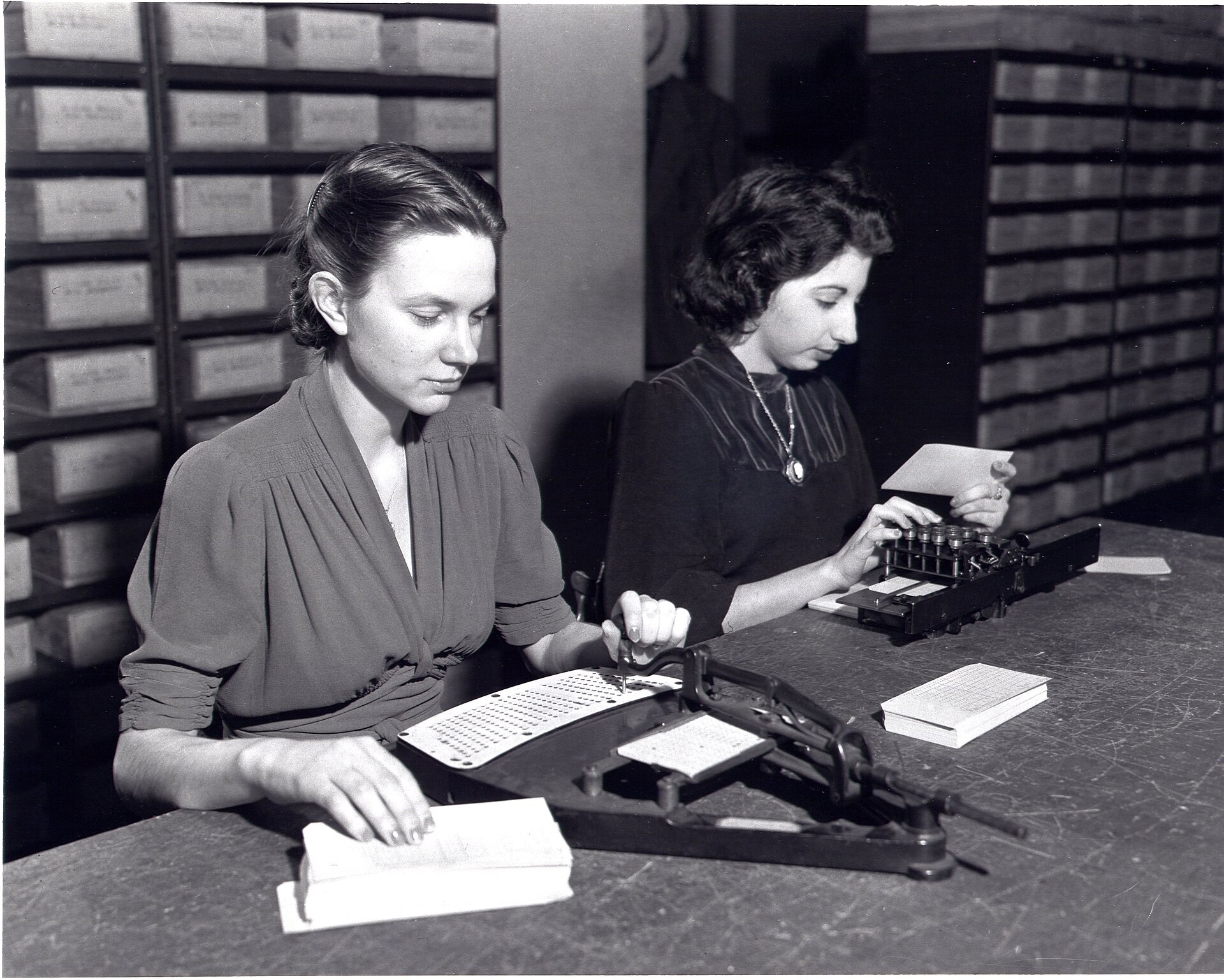
Where the work usually starts.
These are the most important tasks a language model can already handle directly. In a typical engagement the first wins come from building workflows around them, so they stop eating the team's time.
-
Balance currency, coin, and checks in cash drawers at ends of shifts and calculate daily transactions, using computers, calculators, or adding machines.
-
Enter customers' transactions into computers to record transactions and issue computer-generated receipts.
-
Answer telephones and assist customers with their questions.
These are the most important tasks AI can already handle when paired with the right tools and context. The first wins usually come from building workflows around them. That is the difference between a model that could do the job and one that actually does it inside your business.
-
Balance currency, coin, and checks in cash drawers at ends of shifts and calculate daily transactions, using computers, calculators, or adding machines.
-
Receive checks and cash for deposit, verify amounts, and check accuracy of deposit slips.
-
Cash checks and pay out money after verifying that signatures are correct, that written and numerical amounts agree, and that accounts have sufficient funds.
Every role has three or four places like these. Finding them takes an hour. Turning them into a workflow your team actually uses takes a few days.
Every task in the role.
Every O*NET task for this occupation, split by what AI can do unaided and what still needs a person. Importance is O*NET's 1 to 5 rating of how central each task is.
Tasks via O*NET "Tellers" (43-3071.00).
What AI can already do
10 of 28 tasks, unaided
Balance currency, coin, and checks in cash drawers at ends of shifts and calculate daily transactions, using computers, calculators, or adding machines.
Enter customers' transactions into computers to record transactions and issue computer-generated receipts.
Answer telephones and assist customers with their questions.
Identify transaction mistakes when debits and credits do not balance.
Perform clerical tasks, such as typing, filing, and microfilm photography.
Compute financial fees, interest, and service charges.
Compose, type, and mail customer statements and other correspondence related to issues such as discrepancies and outstanding unpaid items.
Quote unit exchange rates, following daily international rate sheets or computer displays.
Issue checks to bond owners in settlement of transactions.
Inform customers about foreign currency regulations and compute transaction fees for currency exchanges.
What still needs a person
18 of 28 tasks
Receive checks and cash for deposit, verify amounts, and check accuracy of deposit slips.
Monitor bank vaults to ensure cash balances are correct.
Cash checks and pay out money after verifying that signatures are correct, that written and numerical amounts agree, and that accounts have sufficient funds.
Count currency, coins, and checks received, by hand or using currency-counting machine, to prepare them for deposit or shipment to branch banks or the Federal Reserve Bank.
Examine checks for endorsements and to verify other information, such as dates, bank names, identification of the persons receiving payments, and the legality of the documents.
Resolve problems or discrepancies concerning customers' accounts.
Prepare and verify cashier's checks.
Process transactions, such as term deposits, retirement savings plan contributions, automated teller transactions, night deposits, and mail deposits.
Count, verify, and post armored car deposits.
Carry out special services for customers, such as ordering bank cards and checks.
Sort and file deposit slips and checks.
Receive and count daily inventories of cash, drafts, and travelers' checks.
Order a supply of cash to meet daily needs.
Arrange monies received in cash boxes and coin dispensers according to denomination.
Receive mortgage, loan, or public utility bill payments, verifying payment dates and amounts due.
Explain, promote, or sell products or services, such as travelers' checks, savings bonds, money orders, and cashier's checks, using computerized information about customers to tailor recommendations.
Obtain and process information required for the provision of services, such as opening accounts, savings plans, and purchasing bonds.
Process and maintain records of customer loans.
Tasks via O*NET "Tellers" (43-3071.00).
What AI can already do
22 of 28 tasks, with tools
Balance currency, coin, and checks in cash drawers at ends of shifts and calculate daily transactions, using computers, calculators, or adding machines.
Receive checks and cash for deposit, verify amounts, and check accuracy of deposit slips.
Cash checks and pay out money after verifying that signatures are correct, that written and numerical amounts agree, and that accounts have sufficient funds.
Enter customers' transactions into computers to record transactions and issue computer-generated receipts.
Examine checks for endorsements and to verify other information, such as dates, bank names, identification of the persons receiving payments, and the legality of the documents.
Resolve problems or discrepancies concerning customers' accounts.
Prepare and verify cashier's checks.
Process transactions, such as term deposits, retirement savings plan contributions, automated teller transactions, night deposits, and mail deposits.
Answer telephones and assist customers with their questions.
Identify transaction mistakes when debits and credits do not balance.
Carry out special services for customers, such as ordering bank cards and checks.
Order a supply of cash to meet daily needs.
Receive mortgage, loan, or public utility bill payments, verifying payment dates and amounts due.
Explain, promote, or sell products or services, such as travelers' checks, savings bonds, money orders, and cashier's checks, using computerized information about customers to tailor recommendations.
Obtain and process information required for the provision of services, such as opening accounts, savings plans, and purchasing bonds.
Perform clerical tasks, such as typing, filing, and microfilm photography.
Compute financial fees, interest, and service charges.
Compose, type, and mail customer statements and other correspondence related to issues such as discrepancies and outstanding unpaid items.
Process and maintain records of customer loans.
Quote unit exchange rates, following daily international rate sheets or computer displays.
Issue checks to bond owners in settlement of transactions.
Inform customers about foreign currency regulations and compute transaction fees for currency exchanges.
What still needs a person
6 of 28 tasks
Monitor bank vaults to ensure cash balances are correct.
Count currency, coins, and checks received, by hand or using currency-counting machine, to prepare them for deposit or shipment to branch banks or the Federal Reserve Bank.
Count, verify, and post armored car deposits.
Sort and file deposit slips and checks.
Receive and count daily inventories of cash, drafts, and travelers' checks.
Arrange monies received in cash boxes and coin dispensers according to denomination.
Stay on top of this.
An email when there is something worth reading: what is real in AI at work, what is noise, and what operators are doing about it.
Free. Unsubscribe any time.
Related occupations.
Other roles in Administrative and secretarial occupations, and roles close by exposure.
What it means for your sector.
This role's score comes from Eloundou et al's 2023 task labels, weighted by O*NET importance within each O*NET-SOC code, then bridged to UK SOC 2020 through ISCO-08 (the ONS coding index) and US SOC 2010 (the BLS crosswalk). Employment and median pay come from ONS ASHE Table 14.7a, 2025 provisional, which covers employees only.
Back to the mapMethodologySources (PDF)Built 29 April 2026
Pictures
- "Census pantograph and 1930s keypunches" by U.S. Census Bureau employees, public domain, via Wikimedia Commons
- "Shepard Barclay, St. Louis lawyer, in his office" by Missouri Historical Society via DPLA, no known copyright restrictions, via Wikimedia Commons
- "Accountant's Office LCCN2016824374" by National Photo Company Collection, public domain, via Wikimedia Commons
- "Employment service in Oulu in the spring 1931" by Finnish Heritage Agency (Museovirasto), CC BY 4.0, via Wikimedia Commons