
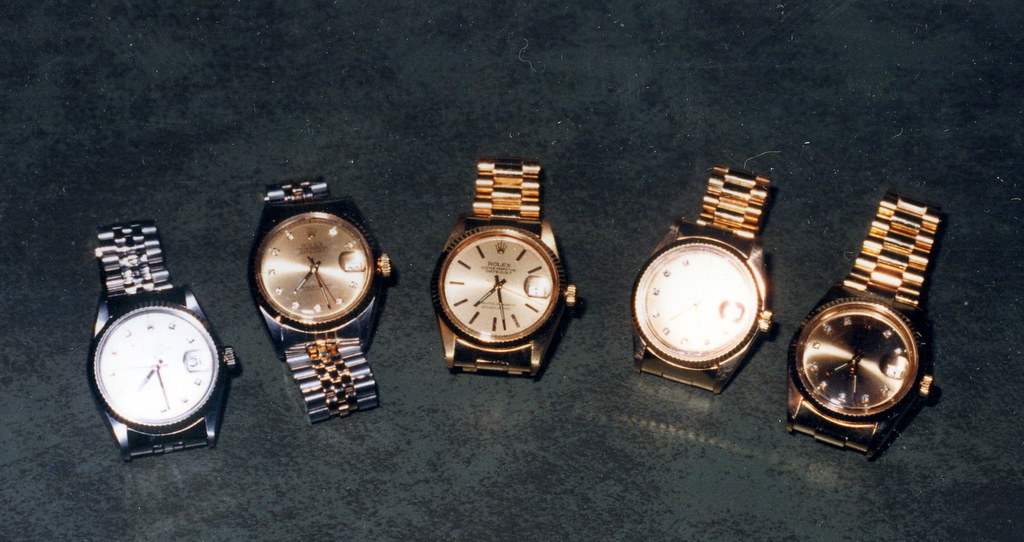
Last month I found ten fake Rolexes on my own website.
Ten of my posts from 2024, real pieces about recruitment and running lean, had at some point been swapped for short AI rewrites. They had the same titles and the same URLs, with all of me taken out. “How to Win and Retain Business in Recruitment” had been an 18-minute read. What was live was 173 words of generic advice, including the sentence “When you specialisation”. Nobody had noticed, me included, because it looked like a blog post.
That’s the problem with AI slop in one example. From a distance it passes. Up close, it tells the reader something about you that you never meant to say.
The reversal
Slop works backwards. The person sending it thinks they’re demonstrating capability: a polished email, a confident LinkedIn post, a proposal that sounds like a consultancy wrote it. The person receiving it reads it as evidence of the opposite.
When something obviously generated lands in my inbox, I make three quick judgements about the sender, and most people I talk to make the same ones:
- Competence. You couldn’t say this in your own words.
- Effort. This conversation wasn’t worth your time.
- Awareness. You don’t realise how this reads.
The third does the most damage, because it suggests you can’t see yourself the way other people see you. In business, that’s the skill everything else rests on.
We’ve been here before
This is old behaviour with a new engine.
Mail-merge letters pretended to be personal and obviously weren’t. Management jargon dressed ordinary thinking in expensive-sounding words, and most listeners trusted the speaker less for it. Keyword-stuffed SEO articles were written for algorithms and read like it. Templated networking messages simulated interest and revealed that the relationship was transactional.
The best parallel is PowerPoint. In 2003 Edward Tufte wrote a famous piece for Wired, “PowerPoint Is Evil”, arguing that the software pushed people to break complex thinking into bullet points and to put format ahead of content. The deeper effect was that PowerPoint gave everyone the ability to make something that looked like a professional presentation. Once anyone could do it, looking polished stopped being evidence of anything.
AI has done the same to writing, at far greater scale. Twenty years ago, a well-argued thousand-word piece was at least some evidence of a capable mind behind it. Now anyone can produce one in seconds. The output has come loose from the ability it used to signal.
The fake Rolex
Picture someone walking into a meeting wearing an obviously counterfeit watch. They’re wearing it to project success, and the people who spot it conclude the opposite. The status signal becomes evidence against them.
There’s research behind the intuition. In 2010 Young Jee Han, Joseph Nunes and Xavier Drèze studied how people signal status with luxury goods. People who crave status but can’t afford the real thing tend to buy loud, heavily branded counterfeits to copy those they see as wealthy. The people with real standing tend to prefer quiet signals that only other insiders recognise.
Slop is the loud logo. “In today’s rapidly evolving business landscape, one thing is clear” is borrowed authority, the language of insight with no insight attached. To a discerning reader it says you have nothing original to say.
It’s the simulation people mind
People rarely lose standing because they took a shortcut. They lose it because they misjudged which shortcuts are acceptable.
Nobody thinks less of an accountant for using Excel, or of anyone for using a calculator. Increasingly nobody will think less of you for using AI to analyse a dataset, structure a document or check your working. That’s how I run my own businesses: the agents draft, and I decide.
What people do mind is AI used to simulate the things they value from you: personal attention, original thought, genuine conviction.
Picture writing a thoughtful note to a colleague about a hard problem and getting back six paragraphs of generic bullet points with a cheerful conclusion.
Even if the advice is fine, it stings. They’ve outsourced the thinking and kept the appearance of having engaged. That’s a failure of reciprocity, and it’s where the harshest judgements come from.
What I found when I checked my own site
It’s easy to spot slop in other people’s work, so I ran a slop check across all 33 posts and nine guides on this site. It’s a checklist I use with clients, built around nine categories, from flowery words doing no work to the “it’s not X, it’s Y” construction.
It was humbling:
- The ten replaced posts, now restored from archived copies of the originals.
- One of my own long posts had around 30 “it’s not X, it’s Y” lines.
- A statistic about AI market share appeared on three pages with no source. I couldn’t verify it, so it’s gone.
- Several guides opened with AI as the headline, when my whole position is that business comes first and AI plays a supporting role.
None of that was written to deceive anyone. It crept in through speed and through trusting output that looked right. That’s exactly how slop gets into everyone’s work.
Where this is heading
My guess is that professional communication is about to invert.
For years, high status meant producing the most polished, comprehensive, sophisticated-looking work. As that becomes free, some of those traits will start to read as low effort. And things that once looked slightly unprofessional may become signs of credibility: a short email with a real opinion in it, a view clearly grounded in experience, a post that sounds like a person talking, or a professional willing to say “I don’t know” instead of three paragraphs of plausible filler.
Imperfect writing isn’t better for being imperfect. Evidence of real human judgement just gets more valuable as polish gets cheaper. The most capable AI users will be the ones whose work gives you no reason to think about AI at all.
One caveat, said once. These are social judgements, not fair ones. Someone using AI might have excellent judgement, be neurodivergent, write in a second language or simply be short of time. Recognising a style tells you nothing certain about how the work was made, so judge the thinking, not the tool.
Sounding intelligent and being seen as intelligent are becoming two different things. Only the second one wins work.
The slop checklist I used on this site is one of the playbooks we share in the Leanpreneur community.